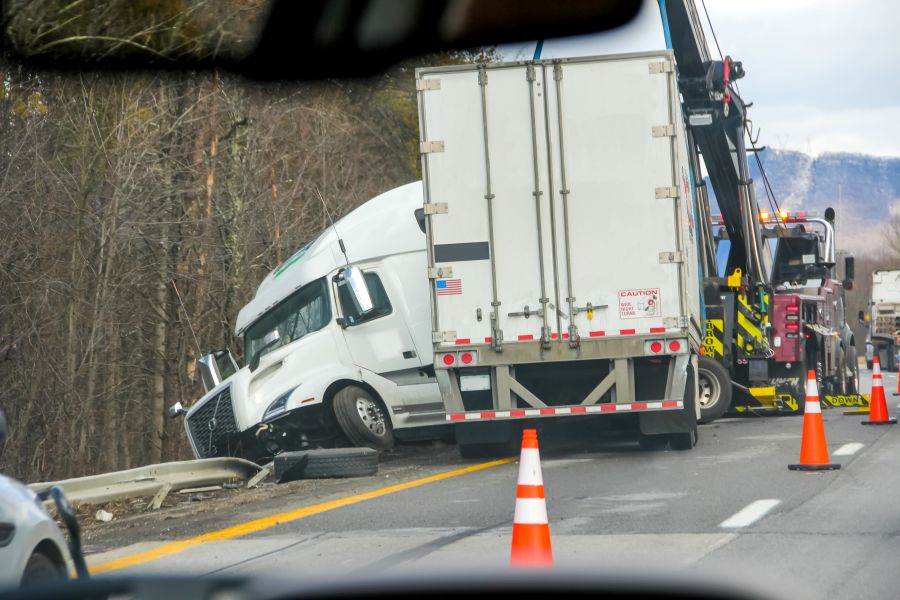

If you’ve ever driven down Lake Shore Drive during rush hour, sat in traffic on the Kennedy, or waited at […]
If you’ve ever driven down Lake Shore Drive during rush hour, sat in traffic on the Kennedy, or waited at a Loop intersection while pedestrians and cyclists weave through gridlock, you already know something that statisticians confirm every year: Chicago roads are busy, unpredictable, and, sometimes, dangerous. A recent count found that over 20,000 people were injured in Chicago-area crashes in a single year, with 83 lives lost. Hundreds more were hurt in motorcycle, bicycle, and pedestrian incidents.
Those aren’t just numbers on a spreadsheet. They’re neighbors, coworkers, parents picking kids up from school, and delivery drivers just trying to get through their shift. At Abels & Annes, P.C., we see this play out in case after case, and here’s the thing we want to talk about today: when a serious crash happens, it’s easy to file it away as a one-off. Bad luck. Wrong place, wrong time. But that framing misses something important. Serious roadway crashes aren’t isolated events that happen to unlucky individuals. They’re community safety events, and treating them that way changes everything about how we respond, who gets held accountable, and how future crashes get prevented.
The “Individual Accident” Framing Lets Everyone Off the Hook
When a crash gets treated purely as an individual accident, the story usually goes something like this: two drivers, one bad decision, an insurance claim, and everyone moves on. It’s tidy. It’s also incomplete.
The truth is, most serious crashes happen at the intersection of individual choices and systemic conditions. A driver runs a red light, sure. But was that intersection also poorly lit? Did the signal timing make it easy to miscalculate? Had the city already logged multiple near-misses at that same corner? When we only ask “who caused this crash,” we skip over the bigger question: “what conditions made this crash possible, and who else is at risk because those conditions still exist?”
That’s the community safety lens. It doesn’t excuse the driver who was texting or speeding. It just adds a second layer of accountability that individual framing tends to erase.
One Crash Is Often a Warning Sign for the Next One
Here’s something we see again and again in personal injury work: dangerous locations rarely produce just one serious crash. They produce a pattern. A blind curve, a confusing merge, a stretch of road with a history of speeding, a delivery zone where trucks back in without adequate visibility. These spots have reputations, even if nobody’s put them on an official list yet.
When a crash at one of these locations gets treated as an isolated incident, the pattern goes unnoticed. Nobody connects the dots between last spring’s motorcycle accident and this fall’s pedestrian crash if each one gets processed as its own private tragedy. But when a crash is treated as a community safety event, the investigation naturally asks broader questions: Has this happened here before? Is there a maintenance issue, a design flaw, a visibility problem? Are we looking at a pattern that a city agency, property owner, or trucking company should have already fixed?
That question matters. Illinois law recognizes that liability can extend beyond the other driver in some cases, to municipalities responsible for road design and maintenance, trucking companies that failed to enforce safety protocols, or property owners whose negligence created a hazard. But those parties rarely get scrutinized unless someone is specifically looking for the pattern instead of just settling the individual case.
Injuries Ripple Out Further Than the People Directly Involved
Think about the last serious crash you heard about in your own neighborhood. Chances are, the effects didn’t stop with the people in the vehicles. A closed street backed up traffic for hours. Kids who normally biked to school that week got driven instead. A local business lost a day of deliveries. First responders, already stretched thin, spent hours on scene instead of answering other calls.
Multiply that by the hundreds of injury crashes that happen across Chicago every year, and you start to see how roadway safety functions less like a personal misfortune and more like public infrastructure. When it breaks down, everyone downstream feels it, whether or not they were anywhere near the crash itself.
This is especially true for vulnerable road users. Bicyclists and pedestrians make up a disproportionate share of serious injuries and deaths on Chicago streets. When a cyclist is struck at an intersection with no protected bike lane, or a pedestrian is hit in a crosswalk with an outdated signal timer, that crash tells a community-wide story about who our infrastructure was actually built to protect, and who it wasn’t.
Treating Crashes This Way Changes How Accountability Works
So what does it actually look like to treat a serious crash as a community safety event rather than an isolated accident? A few things shift:
The investigation gets wider. Instead of just asking who was negligent in the moment, a thorough investigation looks at road design, signage, lighting, maintenance records, prior complaints, and whether the responsible parties knew about a hazard and failed to fix it.
More parties can be held accountable. Depending on the facts, that might include a negligent driver, but it could also include a trucking company that ignored maintenance schedules, a city that failed to repair a known hazard, or a business that didn’t secure its parking lot or loading zone.
Prevention becomes part of the goal. Personal injury claims aren’t just about compensation for the person hurt today, though that’s obviously central. When these cases are pursued seriously, they can also create pressure that leads to safer intersections, better lighting, and policy changes that prevent the next crash at the same spot.
Victims get treated with more seriousness, not less. There’s sometimes a temptation to view an “accident” as bad luck nobody could have prevented. But when a crash is understood as part of a broader safety pattern, the person who was hurt is seen as someone caught up in a preventable failure, not just a statistic in an unfortunate coincidence.
What This Means If You’ve Been Hurt in a Chicago Crash
If you or someone you love has been seriously injured in a car, truck, motorcycle, bicycle, or pedestrian crash in the Chicago area, it’s worth asking more than just “who hit me?” It’s worth asking whether the location, the conditions, or a company’s practices played a role too. That broader view can matter enormously for your case and, honestly, for your community.
At Abels & Annes, P.C., they’ve spent years digging into the full story behind serious roadway crashes in Chicago, not just the surface-level version. They look at road conditions, prior incident history, corporate safety practices, and everything else that might reveal a pattern rather than a one-off. Because when you treat a crash as a community safety event, you often uncover accountability that a narrower investigation would have missed entirely.
If you’ve been injured in a crash and want a legal team that looks at the bigger picture, reach out to Abels & Annes, P.C. for a free consultation. We’re available 24/7 at (312) 924-7575, and there’s no fee unless we win your case.
