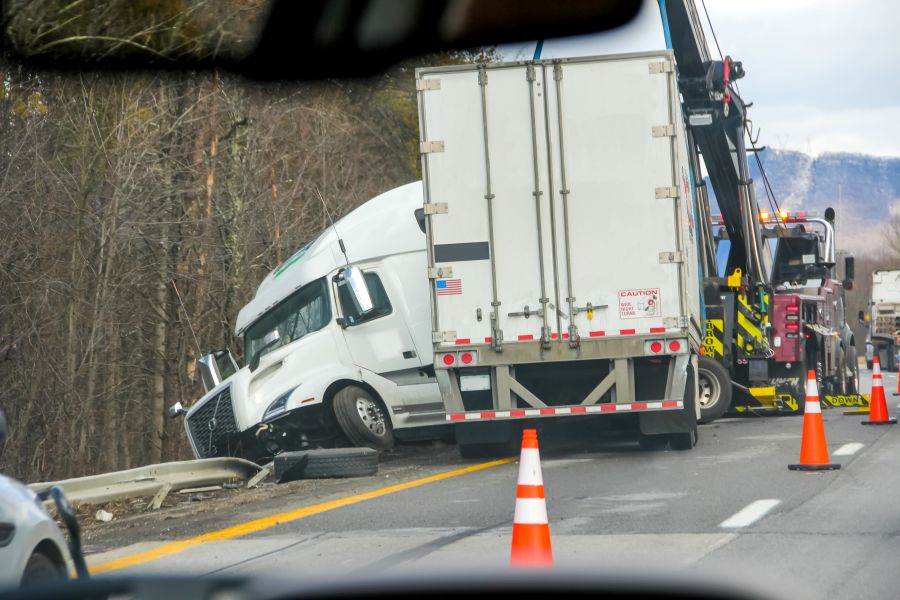

A crash with a semi-truck or large delivery truck is nothing like a fender bender between two cars. A fully […]
A crash with a semi-truck or large delivery truck is nothing like a fender bender between two cars. A fully loaded tractor-trailer can weigh up to 80,000 pounds, and the people in the smaller vehicle almost always take the worst of the impact. In the minutes and days after a crash like this, the choices you make can affect your health, your finances, and your ability to hold the right people responsible.
Truck accident claims also work differently from regular car accident claims. Trucking companies often have insurance adjusters and investigators working on a case within hours, and important evidence can disappear quickly. Speaking with an experienced truck accident lawyer in Albuquerque early on can help you understand your rights before you sign anything or give a recorded statement. Here are the steps that matter most and why each one counts.
Get Medical Care Right Away
Your health comes first. Call 911, move to a safe spot if you can, and accept medical help at the scene. Even if you feel fine, see a doctor within a day or two, because injuries like concussions, whiplash, and internal bleeding do not always show symptoms right away, and adrenaline can hide pain for hours.
Follow your doctor’s treatment plan and keep every record. Medical records create a link between the crash and your injuries, and insurance companies often look for gaps in treatment to argue that an injury is not serious.
Document the Scene if You Can
If you are able to move around safely, use your phone to record as much as possible before vehicles are moved. Details that seem minor now can matter a great deal later. Try to capture the following:
- The truck and trailer: Photograph the company name and USDOT number on the cab, which identify the carrier.
- The crash scene: Take wide shots of skid marks, debris, signals, and road conditions.
- Vehicle damage: Photograph every vehicle from several angles, including impact points.
- Your injuries: Take pictures of visible injuries and keep taking them as they change.
- Witness information: Get names and phone numbers from anyone who saw the crash.
- The police report number: Ask the officer for it so you can request a copy later.
In Albuquerque, the responding agency may be the Albuquerque Police Department, the Bernalillo County Sheriff’s Office, or the New Mexico State Police, depending on where the crash happened.
Be Careful What You Say to Insurance Companies
Not long after the crash, you may get a call from the trucking company’s insurance carrier. The adjuster may sound friendly, but their job is to limit what the company pays, not to make sure you are treated fairly.
It is usually wise to hold off on recorded statements or settlement offers until you know the full extent of your injuries. Once you sign a release, you generally cannot ask for more money later, even if your injuries turn out to be worse than you thought.
Why Evidence in Truck Cases Disappears Fast
Commercial trucks carry data that most cars do not. Many trucks have an engine control module, often called a black box, that records speed, braking, and throttle in the moments before a crash, and many drivers must use electronic logging devices that track time on duty. This data can show speeding, late braking, or driver fatigue.
Some of this data can be overwritten as the truck keeps running, and security camera footage from nearby businesses is often erased within days or weeks. Sending a preservation letter early is one way to help keep this evidence available.
Who May Be Responsible for the Crash
In many truck accidents, the driver is not the only party at fault. The trucking company may be responsible if it hired an unqualified driver, skipped maintenance, or pushed drivers to break federal hours-of-service limits. A cargo loader, a parts manufacturer, or a repair shop may also share blame, depending on what caused the crash.
The federal government tracks fatal and injury crashes involving commercial vehicles every year in the FMCSA’s Large Truck and Bus Crash Facts report, which shows how often people in passenger vehicles are hurt in these collisions. When a driver or company breaks a safety rule and that leads to a crash, the violation can become strong evidence in a negligence claim.
Why Albuquerque Sees Heavy Truck Traffic
Albuquerque sits where two of the busiest freight routes in the Southwest cross. Interstate 40 carries trucks east and west between Arizona and Texas, while Interstate 25 moves freight north toward Denver and south toward Las Cruces and El Paso. The two highways meet at the Big I interchange near downtown, one of the busiest traffic points in New Mexico. Drivers also face the steep grades and curves of Tijeras Canyon east of the city, strong spring winds, and heavy traffic on roads like Coors Boulevard and Paseo del Norte. With this much commercial traffic moving through Bernalillo County every day, local drivers share the road with big rigs far more often than people in many other cities.
Know the Deadlines in New Mexico
New Mexico generally gives injured people three years from the date of a crash to file a personal injury lawsuit. Even so, waiting can hurt a case long before that deadline arrives because evidence fades. If a government vehicle was involved, such as a city or state truck, much shorter notice rules under the New Mexico Tort Claims Act may apply.
New Mexico also follows a pure comparative fault system. This means you can still recover damages even if you were partly at fault, though your award is reduced by your share of the blame.
Frequently Asked Questions
Should I talk to the trucking company directly? It is best not to discuss fault or injuries with the driver, the company, or its insurer beyond basic information. Anything you say can be used to reduce or deny your claim, so let a legal professional handle those conversations when possible.
What kind of compensation may be available? Depending on the case, damages may cover medical bills, lost wages, reduced earning ability, pain and suffering, and property damage. The amount depends on the injuries, evidence, and available insurance.
Protecting Yourself After a Truck Crash
A truck accident can leave you facing injuries, missed work, and a trucking company that moves fast to protect itself. Getting medical care, documenting the scene, and being careful with insurers protect you early on. Because truck cases involve special evidence and federal rules, getting guidance soon after a crash can help you understand your options.
