
Nha Trang, Da Nang, Ho Chi Minh City — walk into any beachside café or downtown wine bar and you […]
Nha Trang, Da Nang, Ho Chi Minh City — walk into any beachside café or downtown wine bar and you will see them: Korean executives with their Vietnamese wives, German retirees pushing strollers, Russian couples chatting in fluent Vietnamese, American digital nomads explaining family WhatsApp groups to their in-laws. International marriage has quietly become one of the defining social trends of modern Asia, and Vietnam sits squarely at its centre.
But behind the wedding photographs and the bilingual children, a quieter trend has been building. Cross-border divorces are rising almost as fast as the marriages themselves — and for the foreign spouses caught up in them, the legal, financial and emotional bill can be steeper than they ever imagined.
A Continent of Mixed Marriages
Across East and Southeast Asia, the demographics of marriage have been rewritten in a single generation. Ageing populations, shrinking rural workforces and a stubborn male surplus in South Korea, Taiwan and parts of China have pushed millions of men to look abroad for partners. At the same time, the rise of dating apps, English fluency, low-cost airlines and remote work has made it easier than ever for Westerners to meet, fall in love with and settle down with someone on the other side of the world.
Vietnam has emerged as one of the most prominent “sending” countries in this story. Tens of thousands of Vietnamese women now marry foreign men each year, the great majority of those husbands coming from Taiwan, the United States, South Korea and mainland China. Together, those four nationalities account for roughly three out of every four foreign spouses recorded in Vietnam in recent years.
The pattern in receiving countries mirrors this. In South Korea, Vietnamese women are now by some distance the single largest group of foreign brides — well ahead of Chinese, Thai and Filipino women. In Taiwan, the so-called xinzhumin (new residents) community is overwhelmingly Vietnamese. And in cities like Nha Trang, where this firm is based, an entirely different pattern has taken root: long-staying Russian, Korean and Western European expatriates marrying urban, English-speaking Vietnamese professionals, often after years of dating rather than weeks of matchmaking.
When the Honeymoon Ends
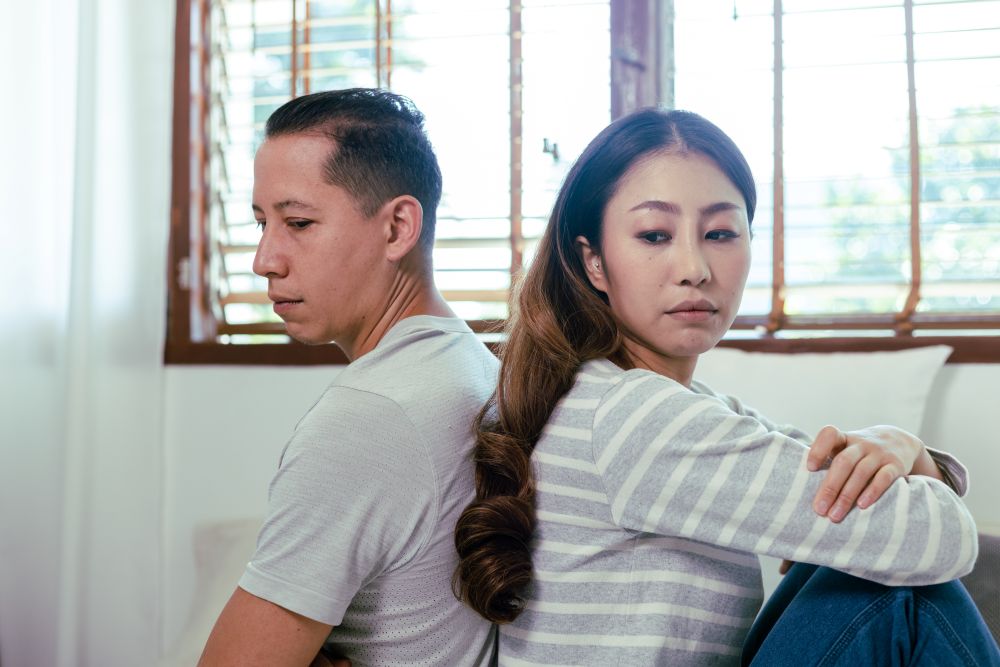
The trouble is that international marriages, however romantic on the surface, are also some of the most fragile. Studies tracking cross-national couples in Korea have repeatedly found that their divorce rates run several times higher than those of same-nationality couples, with a disproportionate share collapsing within the first two years. Korean media reported recently that divorces between Korean men and Vietnamese women rose roughly eight percent in a single year — the sharpest jump in more than a decade.
Lawyers who handle these cases day to day in Vietnam say the breakdowns rarely come down to a single dramatic incident. They come from a slow accumulation of small misunderstandings, none of which would sink a same-culture marriage on its own.
Language is almost always the first crack. Many couples marry before either partner is truly fluent in the other’s language, and when the early excitement fades they discover they cannot argue, joke, comfort one another or talk about money in a shared tongue. Important decisions get made through a translator app. Resentment grows on both sides.
Family expectations are the second. In Vietnamese, Korean, Chinese and Taiwanese culture, a marriage is understood as the joining of two families, not just two people. The wife is expected to be deeply involved with her in-laws — visiting often, sending money to her own parents, observing death anniversaries and Lunar New Year obligations, hosting relatives for weeks at a time. Western husbands, raised in nuclear-family cultures, often find this intrusive. Asian husbands, especially in rural areas, sometimes expect a level of deference that modern, urban Vietnamese wives are no longer willing to accept.
Gender roles create a third fault line. Foreign men accustomed to dual-income partnerships clash with relatives who expect the wife to manage all of the housework. Some marriages tilt the other way: Vietnamese wives feel their Western husbands are too “soft” with the children, too quick to live separately from extended family, too casual about ancestor worship.
Money is the fourth. Vietnamese households often pool income and quietly send a portion to a wife’s parents or siblings; many Western expatriates prefer separate accounts and explicit budgets. Arguments over remittances, dowries, real estate bought before the marriage, and the upkeep of property in the home country are some of the most common triggers that bring couples into a lawyer’s office.
Children are the fifth, and often the most painful. Where should they be raised? Which language should they speak first? Should they attend an international school or a Vietnamese public one? Which religion — or no religion — should shape them? These questions can simmer for years before they boil over.
Finally, there is the unique problem of mismatched expectations in marriages arranged through brokers. Wives are often shown an idealised portrait of their future husbands; husbands are sometimes told their bride speaks better Korean or Mandarin than she actually does. By the time the truth emerges, a child has usually been born and a visa has usually been issued.
What an Expat Divorce Actually Costs in Vietnam
Once a couple decides to separate, foreign spouses are often surprised by how much the process can cost — and equally surprised by how affordable it can be if handled well from the start.
A straightforward, uncontested international divorce — where both spouses agree on the split, there are no disputed assets, and the children’s custody is settled amicably — typically costs in the range of 15 to 50 million Vietnamese dong (roughly USD 600 to 2,000) in lawyer’s fees for a full end-to-end service. This is the scenario every family lawyer hopes for, and the one that closes fastest, usually within four to six months.
A contested divorce is a different animal. Once assets are disputed, custody is fought over, or one spouse refuses to cooperate from abroad, legal fees commonly run from 50 million to more than 200 million dong (roughly USD 2,000 to 8,500), and high-net-worth or multi-jurisdiction cases involving overseas real estate, family businesses or international child custody disputes can exceed half a billion dong. Hourly rates for senior bilingual family lawyers in Vietnam generally sit between VND 1 million and VND 5 million (USD 40 to 200) per hour, with the top partners at international firms in Ho Chi Minh City and Hanoi charging at the upper end.
On top of legal fees, foreign clients should budget for court fees, which scale with the value of disputed assets and can run from a flat few hundred thousand dong in a no-asset case to tens or hundreds of millions of dong where property is contested. Certified Vietnamese translation of foreign documents typically costs VND 500,000 to 2,000,000 per document, and full consular legalisation of marriage certificates, birth certificates and judgments runs another VND 500,000 to 1,500,000 per document through a service provider. Court interpreters, asset appraisals and judicial entrustment to a foreign jurisdiction can add several million dong more.
For a full picture of what an international divorce service includes — petition drafting, document collection, consular legalisation, court representation and post-decree paperwork — see our overview of divorce services for foreigners in Vietnam.
Choosing the Right Lawyer
The single biggest factor in how much an expat divorce costs in Vietnam is not the number of assets involved; it is the quality and clarity of the lawyer hired at the start. Foreign clients should look for counsel who is genuinely bilingual rather than relying on a translator, who has handled foreign-element cases before, and who provides a written, milestone-based fee agreement that separates court fees, third-party costs and professional fees. A good lawyer will also push hard for mediation and an amicable decree where possible, because a settled divorce is dramatically faster, cheaper and less damaging to any children involved.
Before signing any retainer, expatriates should read our practical guide on hiring a divorce lawyer in Vietnam, which walks through what questions to ask, what red flags to watch for, and what a fair fee structure looks like in 2026.
A Quiet Word at the End
International marriage is one of the most beautiful experiments in modern life. When it works, it produces children who move easily between two worlds and families that span continents. When it does not, it produces some of the most complicated divorces any legal system has to deal with. The lesson from the past decade of cross-border breakups in Vietnam is simple: get good advice early, choose your lawyer carefully, and make the strategic decisions of the first two weeks count — because they will shape the next two years.
