

Translating documents related to a court case or legal matter requires knowledge of the context and conventions around a wide […]
Translating documents related to a court case or legal matter requires knowledge of the context and conventions around a wide variety of materials, including contracts, pleadings, witness statements, certificates of identity, evidence, discovery reports, and so on.
Court document translation is a specialty and requires that the court document translator pay close attention to details, such as page breaks and signatures, and to nuances in wording. This kind of translation work can be challenging, even for an experienced legal translator, especially since court documents (more info here) must be filed according to specific requirements in a timely manner.
Here’s what you can expect in the court document translation process:
Specialized Legal Language
Some words can be understood differently or translated multiple ways, based on the context of their usage. Legal documents, however, are highly dependent on context. For example, the words “claim,” “charge,” “notice,” “service,” and “party” can have a variety of meanings, depending on the nature of the matter at hand.
Similarly, “may,” “shall,” “subject to,” and “unless” can indicate a condition or a requirement or make something optional or contingent on another factor.
Translating a legal statement broadly could create ambiguity. Conversely, translating the statement too literally could result in the loss of the original concept.
Translation Accuracy
When reviewing court document translation services, the reader should know whether the language is clear, formal, and specific, or whether the statement or agreement uses hesitation or colloquialisms. The translator may have to reflect the original speaker’s hesitation, unclear statements, or even grammatical mistakes if this statement was sworn under oath.
The details must also be accurate. These include names, dates, case references, and titles. Proper formatting also reflects the original. This includes the formatting of defined terms and section or clause numbering.
The court document translator will make sure to translate these terms correctly each time they are used, paying close attention to context and the intended effect.
Court Filing Format
Court filings follow rules. Some of the rules are specific to a type of filing; others are specific to the court at which documents are filed.
A court document translation service, including sworn court document translation, needs to replicate the format of the document, including tables, pages, page numbering, exhibits and attachments, signature lines, spaces left blank, stamps or seals, and any other markings.
The court in receipt of the filing may also require a statement of certification. A professional court document translation company can supply these.
Preparing Source Documents
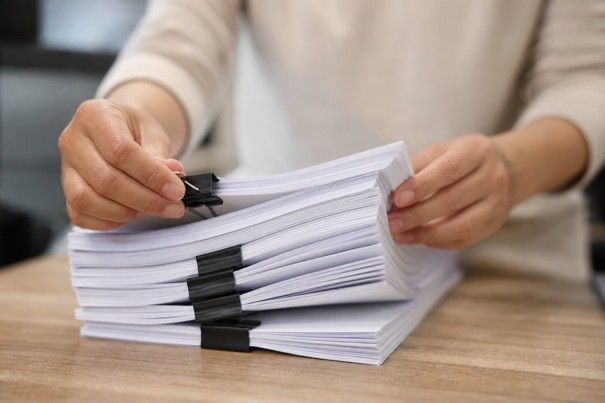
Some court filings are made in a timely manner. When preparing legal documents for translation, counsel and clients should pay attention to any instructions provided, as well as deadlines for filing.
When submitting documents for translation, the most important thing is to provide a complete copy. Translators should see any handwritten notes or stamps on the reverse side of documents. It is also a good idea to submit all related documents, such as the cover sheet or pleading, as well as exhibits and attachments. In the event that a document is not submitted, the court document translation service might not understand the meaning of a phrase or use a term that has been used differently elsewhere in the case.
If you have used the same translation for a term or spelled a name a specific way in previous filings or exhibits, it’s a good idea to let the translation company know. If you have a list of terms, like a glossary or list of names, that should be translated or rendered in a specific way, this list is helpful as well. These lists can make sure the court document translator uses the same term each time, which prevents confusion or an erroneous understanding of the evidence or arguments being made.
Security and Legibility
Depending on the matter, some legal documents contain highly confidential and personal information (https://legalinstruments.oecd.org/en/instruments/OECD-LEGAL-0188). Court document translation companies must maintain security standards to ensure documents are safe and to prevent the disclosure of private information, including financial, medical, and otherwise.
Illegible Words
When a court filing includes writing that has been obscured by a stamp or seal, or text is written unclearly, the court document translator cannot guess or infer what is meant. This kind of writing may be noted as illegible, or in some cases, the writing may be included as best as it can be deciphered but will be marked as unclear. Guessing at obscured writing would render the court document translation inaccurate.
It is also helpful to check jurisdictional requirements before starting a translation.
Requirements can vary based on the purpose of the translation.
Some courts require only that the translator sign a certification. Others may ask for a detailed affidavit, including translator credentials and attesting to the completeness of the translation.
In some cases, a notarized signature may be required. (This certifies only that the signature is authentic, not that the translation is accurate).
There may be certain filing rules about the language to be used in the certification, attached documents, number of copies, etc.
Knowing this before starting a translation will help in compiling any needed ancillary documents, save time in revising documents, and eliminate the risk of a court clerk rejecting a filing for a technical reason.
To avoid problems of filing mismatched versions, counsel should retain source documents for cases filed electronically. Counsel should also note the version of the pleading sent for translation. If underlying pleadings are amended during translation, every amended page and exhibit should be separately identified to prevent a filing of mismatched versions.
Translation Review
Submitting documents for translation and receiving a completed document may feel straightforward; however, it’s a good idea to have at least 48 hours for review before submitting a document to the court. Some court filings include numerous documents, or documents that are highly formatted. Handwritten or unclear documents require additional review time as well. Allowing enough time for review and proofing avoids mistakes and provides a buffer in the event there are questions about specific terms.
In the review process, the client is making sure all details match the original documents, that the formatting and language read as expected, and that the document has been translated completely and correctly. The reviewer should make sure there are no gaps in the numbering and that any terms, defined terms, or names match the rest of the filing.
