
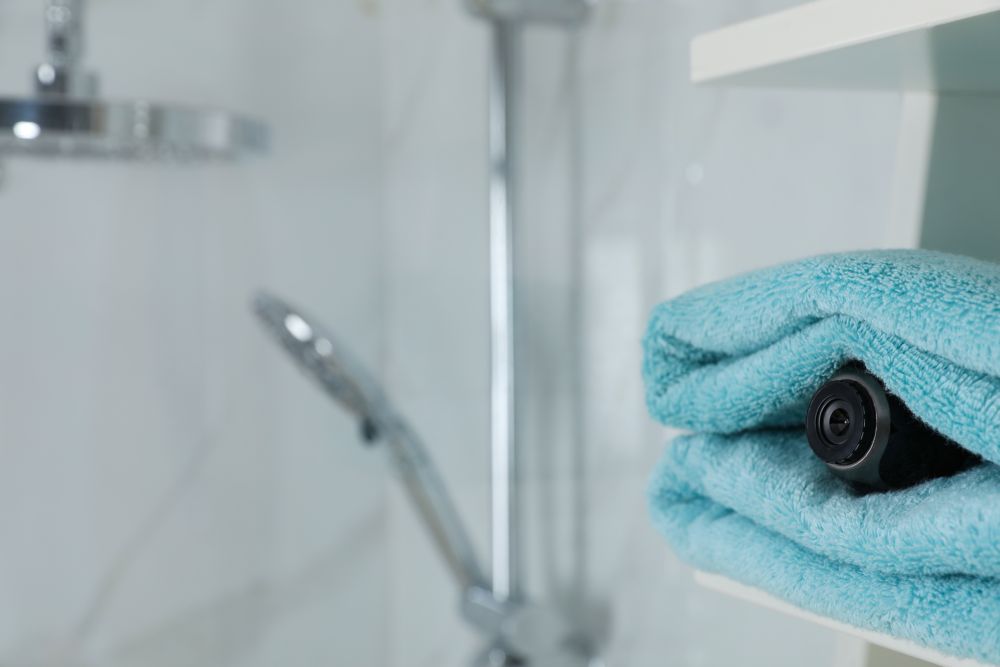
There’s a specific kind of dread that hits when you realize your privacy may have been stolen inside the one place you assumed was entirely yours — your home. It doesn’t always begin with something obvious. Sometimes it starts with a smoke detector that seems just slightly out of place, a landlord who always seems to know your schedule, or a USB charger in the bathroom of a vacation rental that you never plugged in.
Voyeurism crime is not a fringe legal issue in America. It’s turning up in Airbnbs, apartment rentals, college dorms, and suburban homes across the country. And yet most Americans don’t fully understand what it means legally, how it looks in real life, or what steps to take if they suspect it’s happening to them.
Let’s change that — room by room, law by law.
What Voyeurism Crime Meaning Actually Covers Under U.S. Law
The voyeurism crime meaning in the United States is governed by a patchwork of federal and state laws — and understanding both layers matters.
At the federal level, the Video Voyeurism Prevention Act of 2004 prohibits the capturing of images of a person’s private areas without consent in circumstances where that person has a reasonable expectation of privacy. This law applies specifically on federal property — national parks, federal buildings, military installations, and more.
But the real teeth of voyeurism law in America live at the state level. All 50 states now have some form of voyeurism statute, though they vary significantly in scope, language, and penalty. For example:
- California (Penal Code §647) classifies voyeurism as a misdemeanor on the first offense, but repeated offenses or cases involving minors escalate to felony charges with mandatory sex offender registration.
- Texas (Penal Code §21.17) treats voyeurism as a Class C misdemeanor for a first offense but bumps it to a state jail felony if the victim is under 14.
- New York (Penal Law §250.45) defines unlawful surveillance in the second degree as a Class E felony — meaning even a first offense carries potential prison time.
- Florida (Statute §810.145) makes video voyeurism a first-degree misdemeanor initially, escalating to a third-degree felony for repeat offenders or when the victim is a minor.
The consistent thread across all states is reasonable expectation of privacy — a legal standard that protects you in bedrooms, bathrooms, changing rooms, and private areas of your home, regardless of whether you own or rent.
The Numbers Are Hard to Ignore
This isn’t a rare crime. It’s a growing one.
According to the Cyber Civil Rights Initiative, technology-facilitated sexual abuse — including voyeurism — has increased sharply alongside the affordability of hidden recording devices. Mini cameras that once cost hundreds of dollars are now available online for under $15.
A 2023 report by IPX1031 found that 1 in 10 Airbnb guests reported finding or suspecting a hidden camera in their rental. Of those, fewer than half reported it to any authority.
The National Center for Victims of Crime notes that voyeurism is among the most underreported crimes in the country, largely because victims feel shame, uncertainty about whether what happened was “serious enough,” or doubt that law enforcement will act.
It is serious enough. And law enforcement can act.
A Real Story From an Airbnb Guest in Nashville
“We were in Nashville for a bachelorette weekend,” recalls Dana, a 31-year-old teacher from Columbus, Ohio. “On our last morning, one of my friends noticed the alarm clock on the nightstand had a weird angle — like it was pointed directly at the bed, not at any wall.”
They looked it up. It was a commercially available hidden camera disguised as a functional clock.
“We called the police before we even checked out. The host was arrested two days later. It turned out there were recordings going back almost eight months.”
Dana’s group was not the first victims. They were just the first to notice.
How to Check Your Space — Specific Steps, Not Vague Tips
Whether you’re in a vacation rental, a new apartment, or you’ve just started questioning something at home, here’s exactly what to do:
1. Do the flashlight sweep at night. Turn off every light in the room. Shine a flashlight slowly across all surfaces — walls, shelves, vents, appliances. Camera lenses reflect light with a distinct blue or white glint, even when the device appears off.
2. Scrutinize objects that face the bed, shower, or toilet. Smoke detectors in bedrooms (not required by fire code in sleeping areas in most states), wall clocks, picture frames, air purifiers, and plug-in chargers are the most common hiding spots. If an object is positioned to face where you undress or sleep, examine it closely.
3. Use an RF (radio frequency) detector. Available on Amazon for $20–$50, these handheld devices detect wireless signals emitted by transmitting cameras. They’re not perfect, but they add a meaningful layer of protection in unfamiliar spaces.
4. Scan your Wi-Fi network. If you’re connected to the property’s Wi-Fi, open your router settings or use a free app like Fing to see all connected devices. A live-streaming hidden camera will appear as an unknown device. If something looks unfamiliar, flag it.
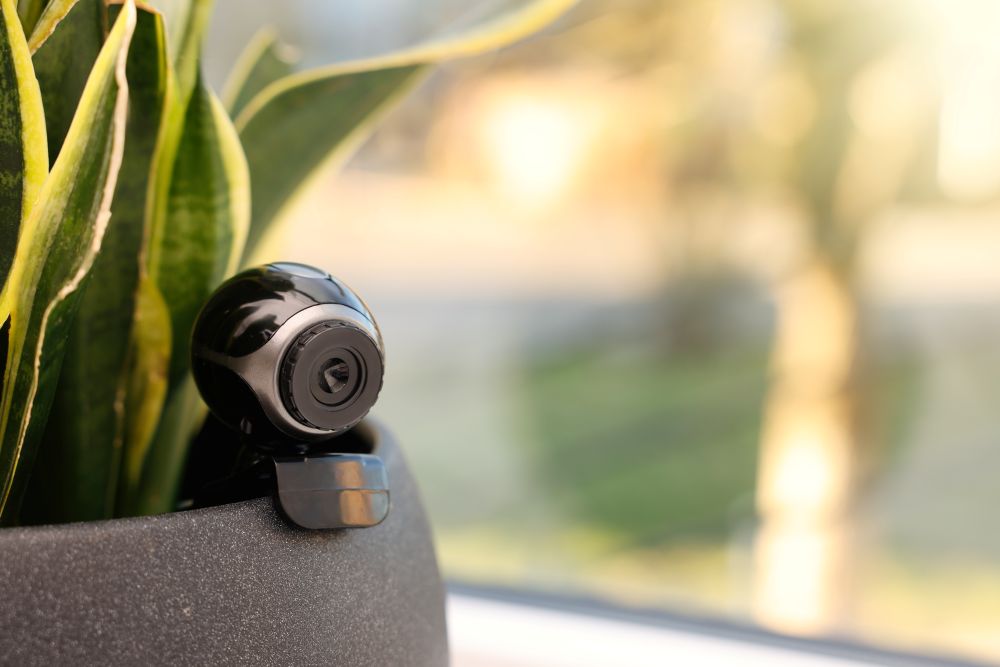
5. Trust physical inconsistencies. A freshly drilled hole in a wall. A vent cover that doesn’t match the others. A smoke detector that’s screwed in slightly crooked. Grout that looks newer in one small section of tile. These are not coincidences — they are access points.
What To Do If You Find One
Finding a hidden camera is a shock. Here is the exact sequence of steps:
- Do not move or touch it if you can avoid it. Physical evidence matters in prosecution.
- Call 911 or your local police department immediately. If you believe recording is actively happening, treat it as an emergency.
- Photograph the device in place before authorities arrive.
- Do not confront the property owner or host directly. Leave that entirely to law enforcement.
- Contact the platform if applicable. Airbnb, VRBO, and Booking.com all have dedicated trust and safety teams with specific processes for these reports.
- Reach out to victim support. The Cyber Civil Rights Initiative (cybercivilrights.org) offers a free crisis helpline at 1-844-878-2274 for victims of technology-facilitated abuse, including voyeurism.
You may also have grounds for a civil lawsuit against the perpetrator, especially in states with strong privacy tort laws. Consulting an attorney who handles privacy violations is worth the initial consultation — many offer it free.
When It’s Not a Stranger
One of the most uncomfortable truths about voyeurism crime in America is that a significant portion of cases involve someone the victim knows — a roommate, an ex-partner, a family member, or a landlord with regular access to the property.
In 2021, a landlord in Portland, Oregon was sentenced to federal prison after tenants discovered cameras hidden in multiple units over several years. He had regular access as the property owner. No one suspected him precisely because he seemed normal and familiar.
The law does not carve out exceptions for familiarity. Consent is the only thing that matters, and the absence of it is criminal regardless of the relationship.
FAQs: Voyeurism Crime in the U.S.
Q: Is voyeurism a sex offense in the United States? In many states, yes. A voyeurism conviction can result in mandatory sex offender registration, particularly for repeat offenses or cases involving minors. The specific requirement varies by state.
Q: Can I be a victim even if the footage was never shared? Yes. The act of recording without consent is itself the crime. If footage is also shared or distributed, additional charges — often under state “revenge porn” or non-consensual intimate image laws — typically apply.
Q: What if I find a hidden camera in my Airbnb? Airbnb explicitly prohibits undisclosed recording devices anywhere in a rental. Contact local police immediately, then report through the Airbnb app or website. Document everything before touching anything.
Q: Is it legal for my landlord to put cameras inside my apartment? No. Landlords may legally install cameras in common areas like hallways or building entrances in most states, but cameras inside your private unit — especially in bedrooms or bathrooms — are illegal without your explicit consent. Period.
Q: Does voyeurism only apply to sexual situations? Not always. Many state statutes cover any observation or recording made for the purpose of sexual gratification, even in non-sexual settings. If someone watches you sleep through a window with that intent, it can legally qualify as voyeurism.
Q: My roommate installed a camera in our shared living room. Is that legal? Shared common spaces exist in a legal grey area, but the device’s purpose and placement matter. If it captures private areas, bathrooms, or was installed for sexual gratification without your knowledge, it likely crosses into criminal territory. Consult a local attorney for state-specific guidance.
The Emotional Weight Nobody Talks About
Victims of voyeurism crime consistently describe the aftermath in terms that go beyond the legal process. It’s the feeling of being watched in memory — replaying ordinary moments with the knowledge that someone else was there too.
Dana, from Nashville, put it this way: “I kept thinking about every private moment in that room. Getting ready in the morning. Sleeping. Talking to my friends. It wasn’t just a crime. It felt like a theft of something I can’t get back.”
If you’ve experienced this, connecting with a therapist who specializes in trauma or technology-facilitated abuse is a meaningful and valid step. The RAINN National Sexual Assault Hotline (1-800-656-4673) also provides confidential support for survivors of voyeurism and related crimes.
You are not overreacting. What happened is real, it is criminal, and help exists.
The Bottom Line
The voyeurism crime meaning in the United States is clear under both federal and state law — but public awareness lags far behind the technology that enables it. Hidden cameras are cheaper, smaller, and more accessible than ever before. The gap between what’s legal and what’s detectable has never been wider.
Check your space. Trust your gut. And if something feels off in the place you call home — that bedroom, that bathroom, that vacation rental you saved up for — take it seriously. Your privacy is not a luxury. It is a right.
Have a question, or a story you’d like to share anonymously? Leave it in the comments. This space is safe, and your experience matters.