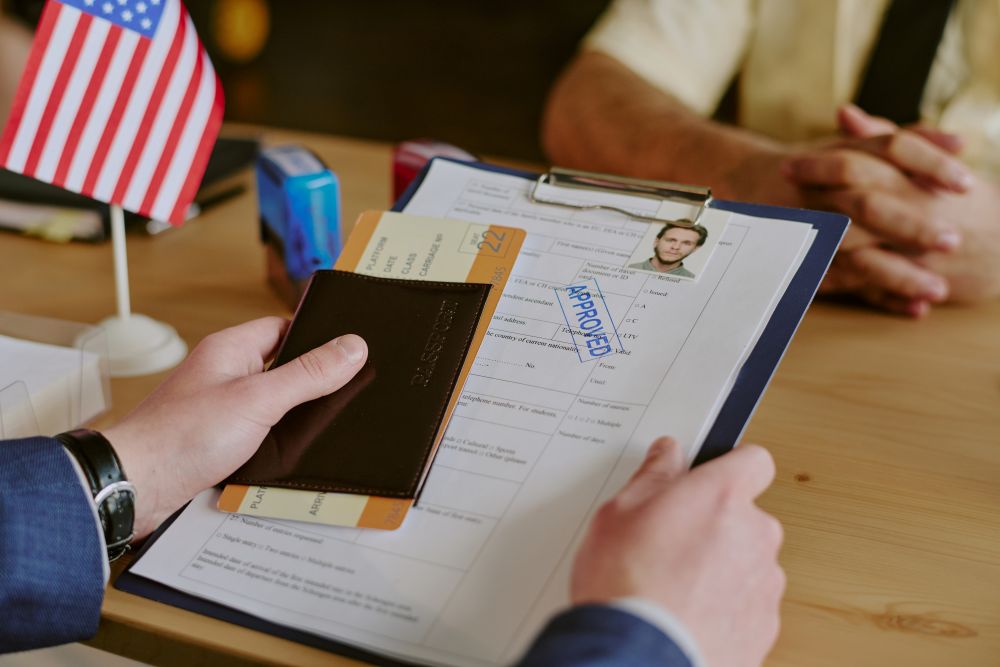

Most people treat the US visa application like routine paperwork. It isn’t. Every form you submit is a legally binding […]
Most people treat the US visa application like routine paperwork. It isn’t.
Every form you submit is a legally binding declaration made under penalty of perjury, and a single misstep can cost you months of processing time or a permanent ban. Here’s what goes wrong most often, and how to avoid it.
Why Legal Accuracy Matters in the US Visa Process
Immigration agencies like USCIS and the Department of State aren’t evaluating your good intentions. They’re verifying statutory compliance, line by line. Under INA § 212(a)(6)(C)(i), material misrepresentation carries an non-waivable, lifetime bar.
Even what looks like an innocent clerical error, such as a job title that doesn’t match LinkedIn or a trip you forgot to mention, can be read as a deliberate attempt to conceal information. The burden of proof sits entirely with you. The government isn’t obligated to help you build your case.
Mistake 1: Choosing the Wrong Category or Agency
Selecting an incorrect category, such as using a B-1/B-2 visitor visa for remote work or an F-1 student visa as a covert path to unauthorized employment, violates nonimmigrant regulations. This error is compounded by partnering with a generalized immigration agency that uses generic templates.
Technical pathways require a specialized firm like EB1A Experts to properly evaluate portfolios and map achievements directly to stringent federal criteria for elite, merit-based categories like the EB-1A, O-1A, or EB-2 NIW.
Mistake 2: Entering Inaccurate Data on Forms
Your DS-160 becomes a permanent federal record the moment you submit it. Passport typos, approximate travel dates, US contact addresses that contradict your stated purpose: these aren’t minor oversights. They’re flags. Consular officers review this form in the hours before your interview. If anything conflicts with what you say in person, your credibility takes an immediate hit. Omitting social media handles or hiding prior visa rejections compounds the problem further.
Mistake 3: Providing Inconsistent Information
Officers are specifically trained to cross-reference multiple data points. If your DS-160 says one thing and your employer letter says another, that contradiction becomes a legal issue, not just an administrative one. Presenting a professional history during your interview that deviates from what’s in your petition is one of the fastest ways to lose an officer’s trust. When pressed on the inconsistency, nervous applicants often give either rigid, memorized answers or flustered, rambling ones. Neither helps.
Mistake 4: Submitting Weak Supporting Evidence
An unverified claim is just an assertion. But to establish that claim as reliable, you need supporting evidence. Immigration adjudicators apply a preponderance of the evidence standard, which means your documents need to do real work. Dumping a pile of unindexed corporate brochures and hoping the officer figures out their relevance doesn’t work.
Outdated bank statements, employer letters without official letterhead, or foreign-language documents submitted without certified English translations are not helpful. Your evidence should be current, clearly labeled, and explicitly tied to the legal requirements you’re trying to satisfy.
Documents That Often Matter
| Document Grouping | Primary Adjudicative Purpose |
|---|---|
| Identity Proofs | Valid passport, current visa stamps, and certified vital statistics records. |
| Application Verifications | Form DS-160 barcode printouts and official interview receipts. |
| Professional/Academic Credentials | Signed letters on corporate letterheads and official university transcripts. |
| Financial Health Records | Certified bank ledgers, tax returns, and asset valuations. |
| Home-Country Ties | Active property deeds, current employment agreements, and family registries. |
Mistake 5: Misunderstanding the Burden of Proof
Under Section 214(b) of the INA, the legal burden of proof rests entirely on the applicant, yet many individuals completely derail their cases by operating under the false assumption that government officers must prove they are ineligible.
In reality, the legal mechanics mandate that you proactively establish eligibility for the requested immigration benefit. Failing to provide objective, current documentation of economic, social, or familial ties to your country of residence leaves the statutory presumption of immigrant intent unchallenged. Vague verbal claims don’t work.
Mistake 6: Hiding Your Prior Immigration History
Your immigration record doesn’t expire. Past refusals, overstays, voluntary departures, or unauthorized employment are all documented and cross-referenced internationally through biometric databases.
Disclosing a prior refusal doesn’t automatically end your case; it simply requires you to show what’s changed since then. Hiding it, on the other hand, converts a manageable issue into an active finding of fraud. The cover-up is invariably worse than whatever it was meant to hide.
Mistake 7: Treating the Interview Too Casually
A consular interview is a formal legal evaluation. It usually lasts two to three minutes, which means there’s no room for rambling, guessing, or inconsistency. Giving verbal answers that contradict your DS-160 form is an immediate credibility problem.
So is hesitating over basic details about your sponsor’s business or the university program you’re supposedly attending. Bring organized, verified documents and know your own application cold before you walk through that door.
Mistake 8: Mishandling Deadlines or USCIS RFEs
A Request for Evidence isn’t an invitation to negotiate. It’s a formal procedural notice with a hard deadline, and missing it means automatic abandonment of your file.
Submitting a partial response is almost as bad; if you don’t address every deficiency the adjudicator identified, expect a denial. A proper RFE response is organized, complete, and built around an introductory legal brief that connects each piece of new evidence directly to the agency’s outstanding concerns.
Mistake 9: Misunderstanding Section 221(g) Hold
A 221(g) notice means your application is incomplete or under administrative review, not that you’ve been permanently refused. Filing a new parallel application in response is one of the most common and damaging overreactions; it triggers system flags and slows everything down.
The only productive path is following the embassy’s exact instructions, whether that means submitting a missing document or simply waiting for a security check to clear.
Mistake 10: Relying on Generic Advice
Visa policies are category-specific and highly sensitive to individual circumstances. What worked for someone on a forum may be exactly wrong for your situation, especially if your file involves a prior overstay, rapid status changes, or employment gaps.
Online advice has no accountability and no knowledge of your specific facts. Complex immigration cases need structured legal strategy, not crowdsourced guesswork.
Complex facts require structured legal strategy rather than generic internet hearsay.
Checklist To Avoiding Legal Flaws
To protect your petition from structural vulnerabilities, utilize this baseline compliance checklist prior to submitting your US visa application:
- Verify Category and Rules: Ensure your visa track matches your travel purpose and satisfies all current federal regulations.
- Maintain Form Precision: Complete your DS-160 accurately and ensure appointment data perfectly matches form confirmation barcodes.
- Harmonize All Evidence: Align dates, histories, and employer names across resumes, corporate letters, and indexed exhibits.
- Disclose History Honestly: Record prior global visa rejections or overstays transparently to neutralize material misrepresentation flags.
- Prepare for Adjudication: Track rigid RFE deadlines carefully and refine concise, truthful interview responses.
Final Thoughts
A US visa application is strongest when the applicant understands the underlying legal framework, provides accurate data, and supports claims with credible evidence. Most processing hurdles begin with avoidable mistakes: selecting the wrong category, submitting incomplete forms, presenting weak or unindexed evidence, delivering inconsistent interview answers, or missing rigid RFE deadlines.
The ultimate goal of this process is not merely completing and submitting paperwork. It is about presenting a legally sound, thoroughly corroborated petition package that provides the reviewing immigration or consular officer with a clear, credible, and compliant basis to confidently make a favorable decision.
FAQs
What are the most common legal mistakes during the US visa process?
The most common mistakes include choosing a visa track that conflicts with travel intent, entering inaccurate data on forms, presenting contradictory timelines, failing to submit objective documentation, hiding past visa refusals, failing to meet the burden of proof, and missing strict agency deadlines.
What mistakes can lead to a US visa refusal?
Refusals are regularly triggered by incomplete application fields, lack of strong documentation establishing country ties, verbal interview statements that conflict with the DS-160, hidden immigration violations, and an inability to concisely clarify the primary purpose of travel.
What happens if there is a mistake on the DS-160 form?
An uncorrected DS-160 error can generate data mismatches during your face-to-face interview, inviting suspicion regarding your underlying credibility. Because consular officials utilize this form as their primary adjudication tool, significant errors require you to submit an updated form or follow the local consulate’s exact correction guidelines.
Book a call with EB1A Experts in order to gain more assistance on the legal process!
Disclaimer
This content is for general informational purposes only and should not be considered legal advice. Immigration pathways vary by individual profile. Always consult an immigration professional before making decisions.
