
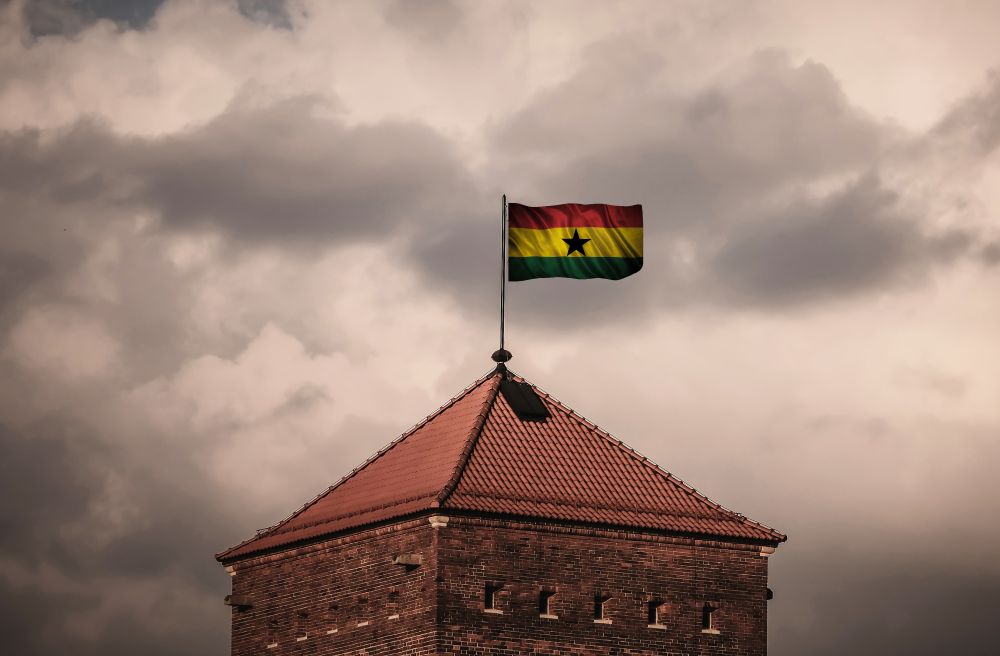
Most Ghanaians have heard the phrase “the constitution says…” thrown around in arguments, on radio stations, and in parliament. But how many of us have actually sat with the document and understood what it gives us — personally, directly, legally?
The 1992 constitution of Ghana is not a politician’s tool. It was written for you. The market trader in Kejetia. The nurse in Tamale. The student in Legon. The fisherman in Elmina. Every single one of you is named — not by name, but by right.
Let us get into what this document actually says, what it has done for this country since 1992, and honestly, where it has fallen short.
How Ghana Got This Constitution — The Inside Story
Before April 28, 1992, Ghana had seen five military coups since independence in 1957. The country had been under the iron grip of the Provisional National Defence Council (PNDC), led by Flight Lieutenant Jerry John Rawlings, since December 31, 1981.
By the early 1990s, pressure was mounting — from donor countries, from civil society groups, and from ordinary Ghanaians who were tired. Ghana’s economy was fragile. The World Bank and IMF had conditioned further support on democratic reforms. But beyond money, people simply wanted their voice back.
A 258-member Consultative Assembly was formed to draft the constitution. A Committee of Experts provided the technical framework. Crucially — and this part is often forgotten — ordinary Ghanaians submitted memoranda. Citizens from all regions contributed their views on what the constitution should protect.
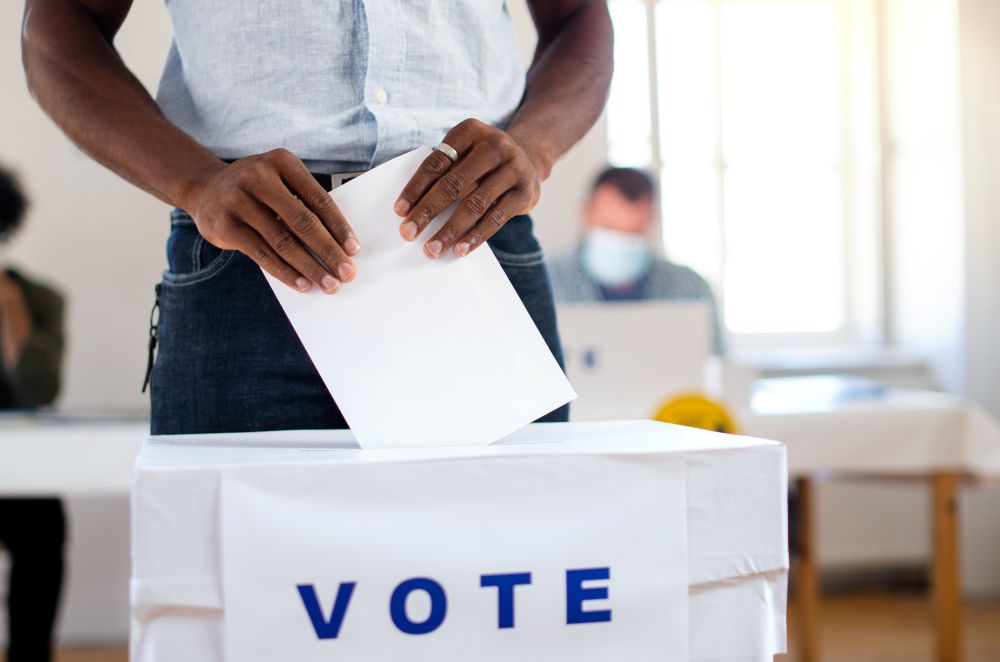
On April 28, 1992, Ghanaians voted in a referendum. Approximately 92.6% voted yes. The constitution came into force. That day did not just change government — it changed the relationship between the state and the people.
Here is the inside story many do not tell: Rawlings himself ran in the presidential election later that same year — under the very constitution his government had overseen. He won. Some called it a controlled transition. Others accepted it as peaceful progress. What mattered was that the constitutional machine had been switched on — and it has not stopped since.
What the Constitution of Ghana Actually Contains
The 1992 constitution of Ghana runs across 26 chapters and 299 articles. For those who want to study it fully, the full 1992 constitution of Ghana PDF is available through Ghana’s Parliament and the Ghana Legal Information Institute. Print it. Read it. It belongs to you.
Here is a plain breakdown of what matters most:
Your Fundamental Rights — Chapter Five
This is the chapter every Ghanaian should memorise in principle, if not in full text.
Article 12 guarantees fundamental human rights to every person in Ghana — not just citizens. Every person. That includes the right to life, personal liberty, dignity, privacy, and a fair trial.
Article 21 protects your freedom of speech, freedom of assembly, freedom of association, and freedom of movement. These are not gifts from any government. They are your constitutional entitlements.
The most powerful provision many Ghanaians do not know about: Article 33 gives you the right to go directly to the High Court if you believe your rights have been violated. You do not need a politician to speak for you. The constitution gives you direct access to justice.
The President’s Powers — And Their Limits
Ghana operates a presidential system. The President is both head of state and head of government, elected by absolute majority — meaning they must win more than 50% of votes cast. If no candidate achieves this in the first round, a runoff is held between the top two.
The President appoints ministers, but those appointments must be approved by Parliament. The President can veto a bill, but Parliament can override that veto. No single person holds unchecked power. That architecture was deliberate.
Under Article 57, the President swears an oath to protect the constitution — not their party, not their ethnic group, not their business interests. The constitution. Full stop.
Your Parliament — What It Is Actually Supposed to Do
Parliament currently has 275 seats, expanded from the original 200. Members of Parliament serve four-year terms. Their primary duty, according to the constitution, is to make laws for the good governance of Ghana — not to enrich themselves, not to settle political scores.
Article 103 establishes parliamentary committees. These committees are supposed to scrutinise government ministries, examine budgets, and hold ministers accountable. When your MP is not asking hard questions in committee, they are not doing their job under the constitution.
The Judiciary — Independent by Constitutional Design
Article 125 states clearly that justice in Ghana emanates from the people and shall be administered in the name of the Republic. The courts — from the District Court up to the Supreme Court — are constitutionally required to operate independently of the executive and legislature.
The Supreme Court has the final say on what the constitution means. When political parties have disputed election results — in 2012 and 2020 — it was the Supreme Court, not street protests, that resolved the matter. That is the constitution working exactly as designed.
The Anti-Coup Clause — Article 3
This is perhaps the most emotionally powerful article in the entire document.
Article 3 states that any person who abolishes or suspends the constitution, or helps anyone do so, commits a high crime against Ghana. It further gives every Ghanaian citizen the right — and the duty — to resist any such attempt, even with force if necessary.
Ghana had five coups before 1992. Since the constitution came into force, there has not been one. That is not a coincidence. Article 3 changed the political calculus entirely.
What the Constitution Has Delivered — The Numbers
- Eight consecutive peaceful elections since 1992 — transfers of power between different parties, without military intervention.
- Ghana ranks among the top three countries in sub-Saharan Africa on the Ibrahim Index of African Governance year after year.
- In the 2020 election, over 17.4 million Ghanaians were registered to vote — a direct result of the participatory democracy the constitution established.
- Ghana’s Supreme Court nullified electoral results in 2013 in some constituencies following a petition — proving the judiciary works independently.
Where the Constitution Has Been Tested — And Where It Has Struggled
Let us be honest. The 1992 constitution of Ghana is a strong document, but implementation has not always matched the text.
CHRAJ — the Commission on Human Rights and Administrative Justice — was created under Article 216 to investigate both human rights violations and government corruption. In theory, it is one of the most powerful institutions in the constitution. In practice, it has been underfunded and politically constrained for years.
The National Media Commission, established under Article 166, exists to protect media independence. Yet journalists in Ghana still face intimidation and pressure in various forms.
Chapter Six — the Directive Principles of State Policy — commits the state to ensuring healthcare, education, and decent housing for all Ghanaians. These are not legally enforceable in court, but they are constitutional commitments. Every time a school lacks textbooks or a hospital lacks basic supplies, Chapter Six is being ignored.
Knowing these gaps is not pessimism. It is citizenship. The constitution gives you the tools to demand better.
Voices From Ghanaians Who Have Lived This
Abena Osei, retired teacher, Kumasi: “I voted in that 1992 referendum. We woke up before dawn. There was no celebration, just quiet seriousness. People understood something important was being decided. Thirty years later, my grandchildren vote freely. That is what we were standing in that queue for.”
Kofi Asante, law student, University of Ghana, Legon: “I downloaded the 1992 constitution of Ghana PDF in my first year and read it cover to cover. Most of my colleagues have not. That is the problem. We argue about politics every day, but we do not know the document that governs us. It should be taught in every senior high school in Ghana.”
Ama Darkoa, community health worker, Wa: “When my clinic was threatened with closure without proper notice, a lawyer told me to read Article 296 on administrative decisions. The constitution has language about fairness in official decisions that most people have never heard of. It helped us fight back.”
FAQs
Q: Where can I get the full 1992 constitution of Ghana PDF for free? The full document is publicly available through Ghana’s Parliament website and the Ghana Legal Information Institute online. Searching “1992 constitution of Ghana PDF” will bring up several legitimate sources. It is a public document — it costs nothing to access.
Q: Can I sue the government if my rights are violated? Yes. Article 33 of the 1992 constitution of Ghana gives you direct access to the High Court when your fundamental rights are breached. You do not need to wait for your MP or any political party to act on your behalf.
Q: How many times has the 1992 constitution been amended? The constitution has strong entrenchment clauses that make formal amendment extremely difficult. As of 2024, no full formal amendment has been passed through the complete procedure outlined in the constitution — a sign of its foundational stability.
Q: What is the difference between entrenched and non-entrenched provisions? Entrenched provisions — like those covering fundamental rights and the structure of government — require a referendum to change. Non-entrenched provisions can be changed by a two-thirds parliamentary majority. The constitution deliberately protects its most important parts.
Q: Why should ordinary Ghanaians care about the constitution? Because your rights, your land, your children’s education, your access to justice — every one of these things is governed by the constitution. Politicians know it. Lawyers know it. It is time every Ghanaian knows it too.
Final Word
The 1992 constitution of Ghana did not fall from the sky. Ghanaians fought for it, debated it, voted for it, and have defended it — sometimes quietly, sometimes loudly — for over three decades.
It is not a perfect document. No constitution is. But it is yours.
Read it. Quote it. Use it. Because a constitution only works when the people it was written for actually know what it says.
Share this article with someone who argues about Ghana’s politics every day but has never read the document that governs them.